Load-carry fabrics
Compare denier, weave construction, basis weight, coating adhesion and seam design for bags, pouches and equipment carriers.
Review load-carry options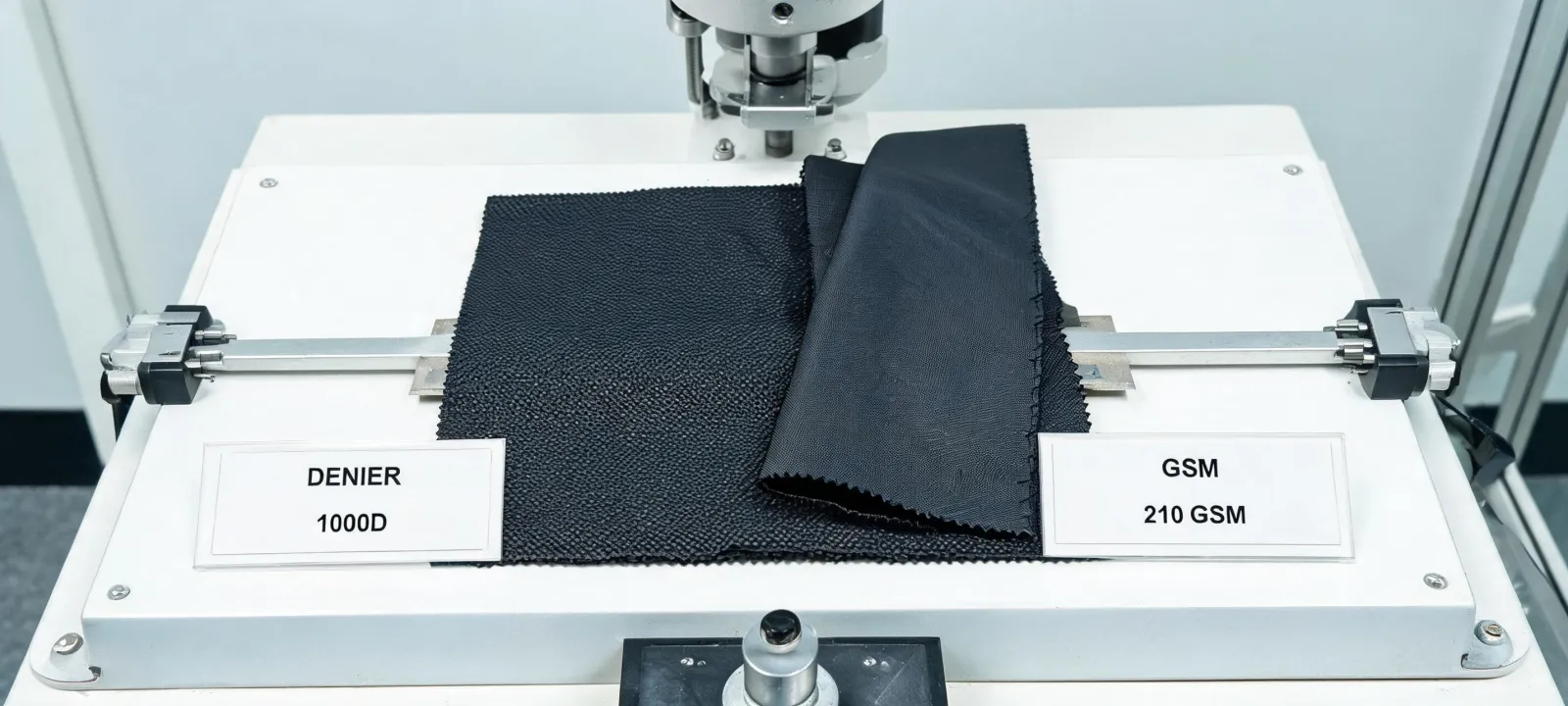
Screen industrial and outdoor materials by fiber, denier, weave, GSM, usable width, coating and the test method that represents the final application.
Compare denier, weave construction, basis weight, coating adhesion and seam design for bags, pouches and equipment carriers.
Review load-carry optionsLocate abrasion zones first, then assess fabric mass, flexibility, colorfastness and compatibility with garment sewing and care cycles.
Review reinforcement optionsTreat water resistance as a system involving face fabric, coating or laminate, seams, closures and hydrostatic-head conditions.
Review outdoor optionsAbrasion, tear, water resistance and colorfastness results depend on construction, coating, conditioning and method. Documents are reviewed against the exact material and date rather than treated as coverage for every Cordura fabric.
Send the expected wear, weather exposure, assembly route, test standard, quantity and delivery need.